
Table of Contents
- Why the Birth Environment Matters
- Supporting Labor at Home Before Going to the Hospital
- Designing an Ideal Hospital Birth Room
- Comfort Measures for Labor and Birth
- Respectful Maternity Care During Labor
- Supporting Physiological Birth and Skin-to-Skin Contact
- What Would Your Ideal Birth Environment Look Like?
- Helping Parents Explore Birth Choices
Why the Birth Environment Matters
It is no secret that most women in the United States are giving birth in a hospital. There are plenty of articles, blogs and opinion pieces on the appropriateness of this environment and the alternatives (such as birth centers or home births). We appreciate the work being done by others to emphasize and promote the importance of the environment for birth and thought, since most women are giving birth in a hospital, what would an ideal hospital environment look like to us? So we did a little dreaming...
Supporting Labor at Home Before Going to the Hospital
A woman giving birth in "Paradise Hospital" is in contact with her midwife or doctor throughout early labor and encouraged to remain at home for as long as comfortable. She is given reminders/tips to conserve her energy (such as eating, drinking, resting/napping) and encouraged to find upright/active positions, when she is not resting, to encourage the baby to descend and her body to open.
Designing an Ideal Hospital Birth Room
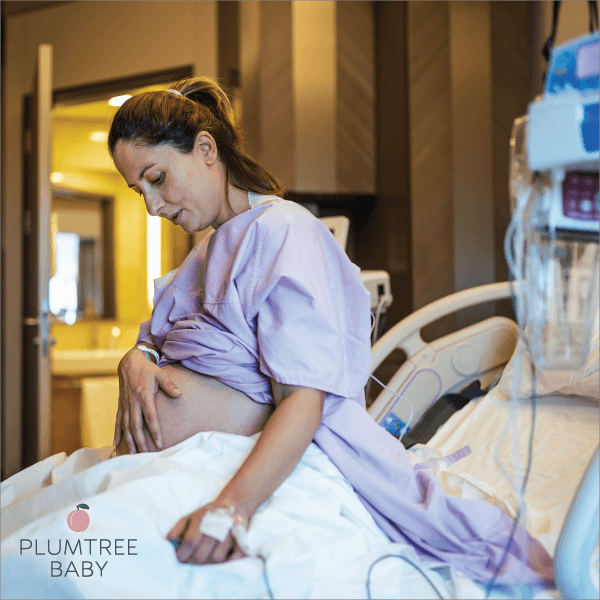
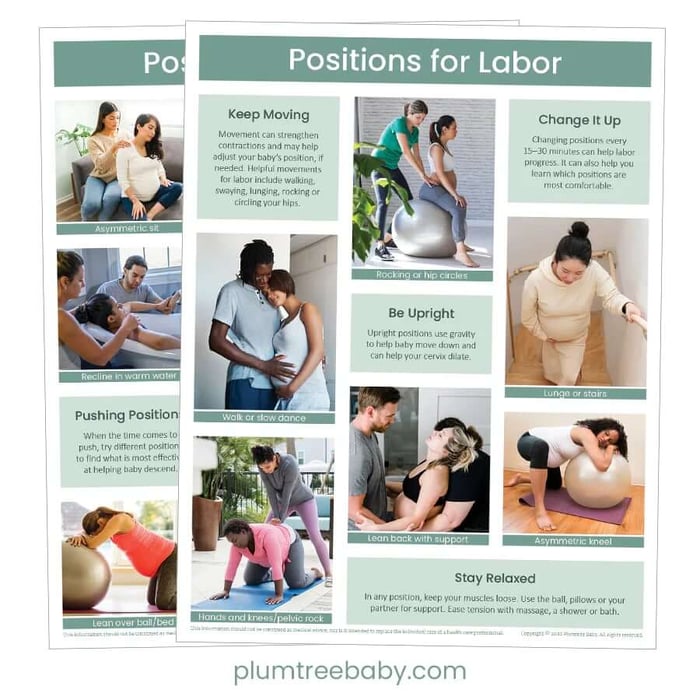
When the time comes to go to the hospital, the midwife or doctor calls ahead to the hospital and makes arrangements for her care. She, her partner and anyone else she chooses to have with her, arrive at the private, birthing entrance to the hospital and are met by an assistant to help with their bags and a valet to park their car. The mother walks calmly down a peaceful, dim hallway to her private room. Inside the spacious room is a large bed in the corner, a large floor mat (thanks to Debra Pascali-Bonaro and Community Hospital Department of OB/GYN in Feldbach, Austria for the inspiration), several birth balls, a birth stool, a large couch and a few different chairs. On the walls are professional photos of focal points (a flower, a drop of water, a single leaf on a stream), relaxing scenes (such as a mountain lake or beach) and a sleeping newborn. Charts with labor positions or comfort measures are on display to encourage mom. There are soft, cozy blankets and numerous pillows on the bed. Railings are placed around the room so mom can grab onto them for support. A rope or cloth hangs from the ceiling for the mother to hold or pull on. The cloth can also be wrapped around her upper body allowing her to "dangle" (loosen her torso and hips) while having upper body supported.
Comfort Measures for Labor and Birth
The large, attached bathroom has a deep tub big enough for two, a separate thermostat and adjustable, overhead lighting. Battery operated candles, large, soft towels and miscellaneous toiletry items rest on shelves. Speakers connect to the sound system in the birthing room, which has several pre-programmed selections, such as soothing music or nature sounds, or the mother can connect her own MP3 player and listen to whatever she chooses.
Respectful Maternity Care During Labor
The mother is encouraged to make herself comfortable, remain in her own clothes or put on a wrap-style, soft cotton dress that is brand new and gives her total freedom of movement and modesty. The nurse attending her discreetly watches the mother to gauge her progress, gives her privacy, offers her something to drink or eat, and suggest comfortable positions. She monitors the baby's heart rate periodically in a way that is least disruptive to the mother and always speak softly and keep the lights dim. All of the equipment and supplies are behind doors or in a storage area to be used only if needed.
Supporting Physiological Birth and Skin-to-Skin Contact
There is total freedom for the mother and respect for her privacy and needs. She is encouraged to trust her instincts and listen to her body. When the mother starts to feel the urge to push, she pushes in whatever way she chooses, such as on the bed, in the water, using the birth stool or squatting on the mat. Her midwife or doctor catches the baby in any position the mother is in. Following the birth, the mother is given the time and space to appreciate what she just did. She picks up her baby or is handed the baby and helped into a comfortable position to rest with her baby on her belly, skin-to-skin. The time to bond with her baby is deeply respected and interruptions are kept to a minimum.
What Would Your Ideal Birth Environment Look Like?
What would you add or change about "Paradise Hospital"? Are you seeing any part of our dream really happening or available in your local hospitals? What do you think is standing in the way of this dream or other similar dreams for an ideal birth environment for all women?
Helping Parents Explore Birth Choices
This is our dream of an ideal hospital birth environment. We are not trying to create a debate about where a woman should give birth (because, frankly, this sounds a lot like a birth center). We are simply offering our dream of how to make the location where most women are giving birth a little better (yes, you can still get an epidural here and they have an OR and other emergency services). While we can't do much to make this dream a reality in every hospital around the country, we can and do help parents understand the impact that the environment and atmosphere of their birth can have on their overall experience. Our Birth Choices booklet encourages parents to understand their options for their birth environment and attendants and begin to explore the impact the birth location on their plans and preferences for birth. We realize that changes in hospital policies, practices and amenities won't happen unless there is a demand from the consumer and we hope that each of the parents we teach (directly through out classes or indirectly through our booklets) will ask for and choose the environment that best suits them and their needs.
Copyright 2011 © All Rights Reserved Plumtree Baby, LLC
Disclaimer: All content provided is for educational and informational purposes only, and should not be construed as medical advice. These statements are not intended to diagnose, treat, cure or prevent any disease and no alterations in lifestyle should be taken solely on the contents of this website. Consult your physician on any topics regarding your health and pregnancy. Plumtree Baby, LLC does not assume any liability for the information contained herein, be it direct, indirect, consequential, special, exemplary or other damages.